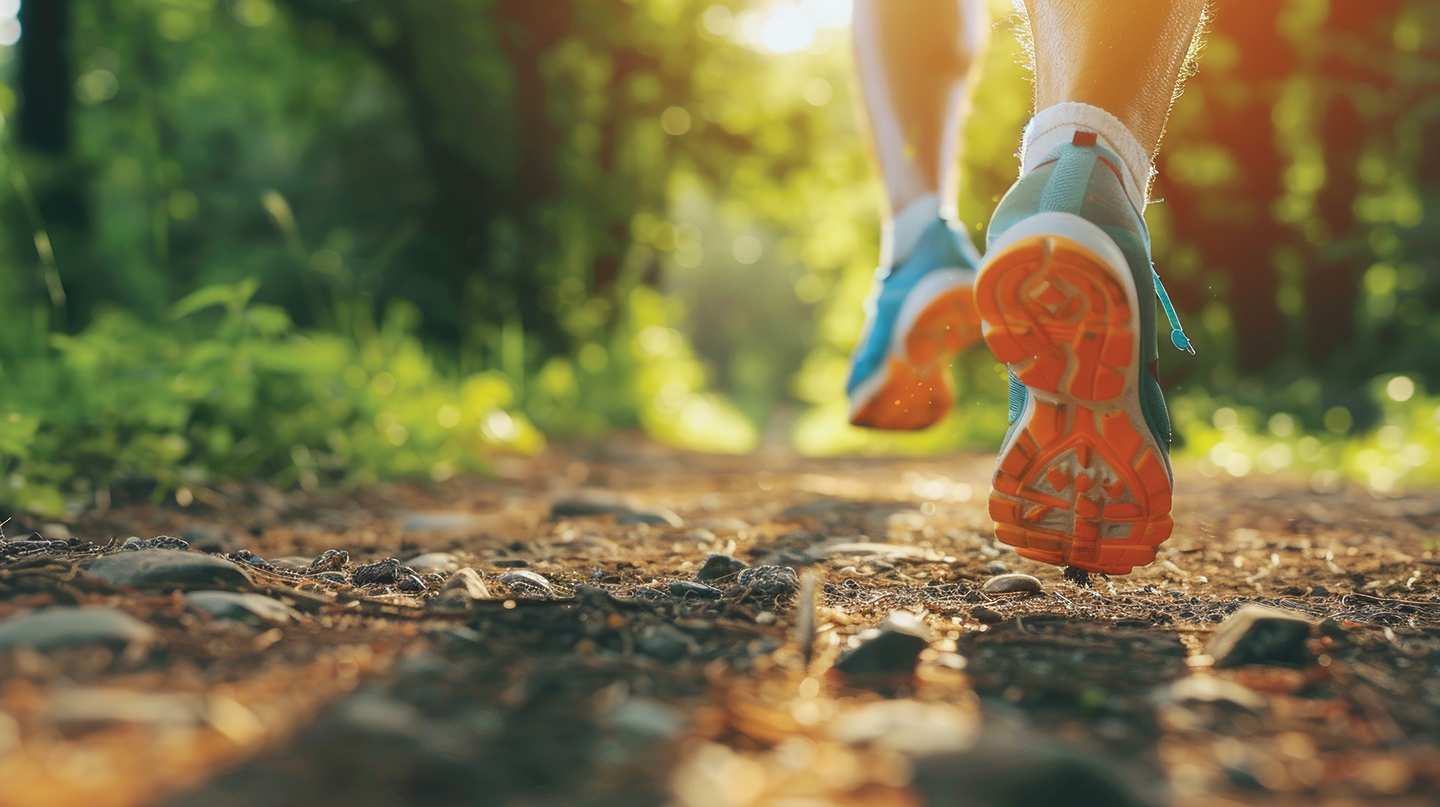
When a passion project is mentioned, most people think big: a project car, a non-profit organization, or petitioning their local government. However, this is not always the case. Passion projects can be as simple as a tomato garden on the back porch, educating yourself on a new subject that you might be interested in, or learning to cook something new from scratch. Projects like these can provide people with an extremely valuable opportunity that only comes up every so often in one’s life: the opportunity to start from the ground up and build something anew.
As an 8th grader with aspirations of being a college athlete but not quite enough talent to back it up, I decided to begin a project of my own.
You see, I was always an average athlete as a kid, small, but quick; quick, but not that fast; good, but usually only good enough to start on the B-team. This was the common trend even into my 8th-grade track season. Again, I found myself good enough to make the meets, but only to be second- or third-fastest in my events. But for me, this was plenty to absolutely fall in love with the sport, because as an athlete with average speed, getting a bronze medal in the 200-meter dash was an incredible feeling. From that moment on, I knew I’d be chasing that high for a long time.
However, that did not mean I ever had a desire to run long distance; in fact, that was the far opposite of what I wanted to do. When summer rolled around and I got myself signed up for summer track, those dreams of being a sprinter were promptly put out, and I was placed into the 800m-1600m training group. Even though this wasn’t what I had in mind, I figured my coaches must have known better than me, and if I put my head down and did the workouts, I would eventually get better. So I did just that: I showed up every practice, and on days with no practice I went on slow runs to keep building up my “aerobic engine,” as my coaches called it. Don’t be fooled into thinking any of these practices or easy runs were spectacular; most of the time my target paces were a long shot faster than what I could do, and I don’t think my calves had ever been more sore in my life! When the first meet rolled around, I ran the 1500 and 800, coming in 2nd to last in both. But I knew that this was temporary and that growth would come with time.
What I didn’t expect was for that growth to come in the next two weeks when I competed at the Antonian City Mile, a co-ed track meet where the only event is the mile, and you are placed into heats based on only your personal best. Upon my arrival, my coach decided to let me know they had entered me in the meet with a time that was 20 seconds faster than I had ever run before (20 seconds in a mile race is about a hundred-yard gap). I was petrified; not only was this my first full mile race, but I would be racing people far more experienced than I was. But some switch in my brain flipped when I got out onto the line, and I decided I would try to lead the race from gun to tape, for no reason other than curiosity. So I started out hot, but only right in front of the next runner, and when another boy passed me by in the third lap, I made sure to stick so close he could hear me breathe, and come the final lap I found another gear and brought home my first win. Of course, it was only in probably the 10th fastest heat at this large track meet, but I felt like I was on top of the world after that. For the first time in my running journey, I got a taste of progress, and felt like I had something real, potential.
When I finally got into high school, I didn’t stop there; I kept showing up every day, grinding through the stuffy and humid summer long runs to prepare for cross country and the cold and dark morning workouts in the winter before the track season, and through this I grew to be a standout runner in the San Antonio area and made it to state several times. But I didn’t do it alone; I was blessed to get to run with some of the most fantastic young men I had ever met. One standout example was Caleb Dehart; he wasn’t always the fastest guy on the team, but he was without a doubt the hardest-working person I had ever met. Homework at meets in between races, watching study videos on the rowdy bus rides to overnight races, practicing his conducting skills in the hotel. He was ultra focused. But despite the strenuous workload he placed himself under, he still had just as much fun as any of us did, and always spent time with the younger guys on the team discussing mentalities and school and anything else we needed advice on.
He and several other upperclassmen embodied the very essence of why it’s important to start from the ground up. When you learn the ins and outs of something- the hiccups, the barriers, the breakthroughs, the benchmarks- it gives you the opportunity to give back. And as a now-senior who has led my team through brutal workouts, state championships, and national qualifiers, I can tell you that it is one of the most fulfilling feelings you may ever experience.
The great part about grassroots learning and work is that anyone can do it; you don’t have to run hundreds of miles or win any championship, you just have to start. Start that book, take your friend up on their invite to a new social group, ask how you can serve in your church, just get the ball rolling in whatever it is. A popular thing I hear as a runner is that it’s hardest in the middle of the race, but really, the hardest part is lacing up your spikes in the first place.
“A popular thing I hear as a runner is that it’s hardest in the middle of the race, but really, the hardest part is lacing up your spikes in the first place.”
From the November 2026 issue of The Kendall Gentleman.
Mason Nelson joins other young writers in BetterMENt, including Addison Schuepbach’s Ask That Girl To Dance and Brayden Church’s Before It Becomes a Memory. For more BetterMENt, read Tommy Mathews’s Following the Ratio. For more from this issue, read Glynn Praesel: Don’t Ever Quit Climbing Trees.