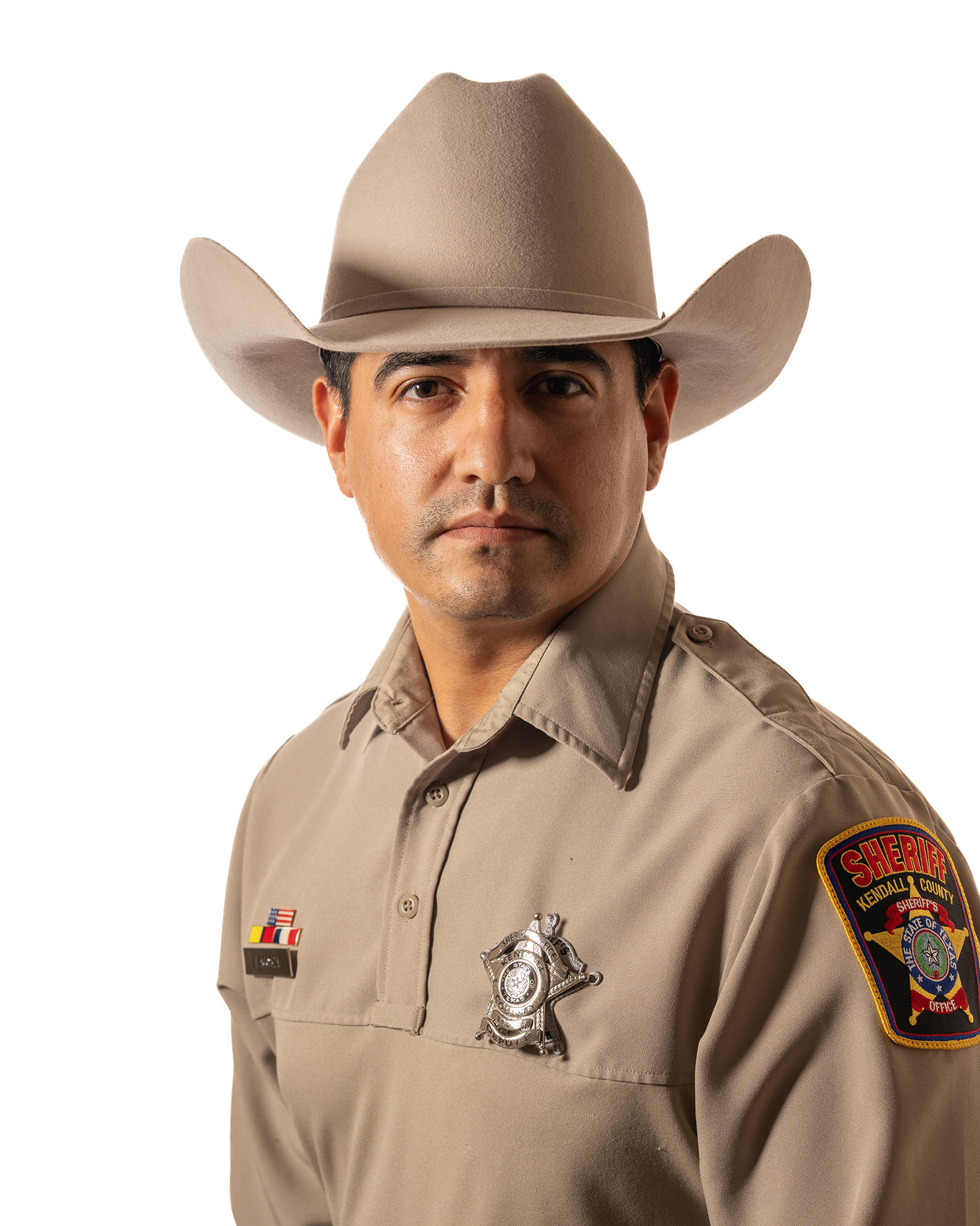
Finding Purpose Early
Officer Juan Acosta’s path into law enforcement did not begin in a classroom or a recruiting office. It started in a rough Chicago neighborhood where gangs, drugs, and violence were a daily reality.
As a high school student, Acosta took notice of the school resource officers who served as liaisons between students and law enforcement. He watched how they navigated chaos with calm and authority, and how their presence changed the atmosphere around them.
“I really looked up to him,” Acosta said of one officer in particular. “I said, man, I want to be like him one day.”
That curiosity led Acosta to become deeply involved with law enforcement even before graduating. He began sharing information about gang activity and drug deals that were coming into his school, providing dates, times, and names. He understood the risks, but he also understood the stakes.
“That’s when I really noticed I was good at it,” he said. “I was able to talk to people on both sides, and they didn’t know what I was doing.”
It was the first sign that he had the instincts and discipline needed for the job.
From Chicago to the Hill Country
Acosta eventually moved to Texas, drawn by the outdoors and the opportunity to build a life in a different environment. He began his career with Bexar County, working in the jail before putting himself through the police academy.
“I was never the type of person to be very secluded,” he said. “I was always out on the streets and knew a lot about the streets.”
After graduating from the academy, Acosta joined the Kerrville Police Department, where he received advanced training and began focusing on drug interdiction. Wanting a broader operational scope, he eventually transitioned to the Kendall County Sheriff’s Office.
Today, Acosta serves as a patrol deputy and is also a member of the Sheriff’s Office Special Response Team.
“We train monthly, physically and with our weapons,” he explained. “We run different scenarios so we are ready when it matters.”
The Weight Behind the Badge
While the public often sees the uniform, Acosta says the real burden of law enforcement is carried quietly and over time.
“It’s not just putting people in jail or writing tickets,” he said. “It’s opening a case, following it through, and going to court. People don’t see the amount of work that goes into death investigations, murders, or sexual assaults.”
Those experiences accumulate, even for officers who love the work.
“In the beginning, it’s very mental,” Acosta said, describing the early years of training and field work. “Later in your career, it becomes emotional. You see things firsthand that most people only hear about.”
Fatherhood changed how those moments landed.
“When you have a daughter and you see things involving children, it hits different,” he said. “You still do your job. It’s still your passion. But you see life differently.”
Integrity When No One Is Watching
When asked what service means when there are no cameras and no recognition, Acosta did not hesitate.
“Integrity, honesty, and professionalism,” he said. “If you don’t have those, how can the community trust you as a public servant?”
That commitment extends to leadership decisions, even when they are unpopular.
“We have to stay professional and do what is legal,” Acosta said. “Even when people don’t like it.”
In a smaller community like Kendall County, those choices are felt more personally.
“Everyone knows everyone,” he said. “Your reputation matters.”
Resetting After Hard Calls
For Acosta, processing difficult calls begins with accountability.
“I make sure I did everything correctly and didn’t miss anything,” he said. “By the time I leave work, I want to know the job was done the right way.”
Only then does he begin to decompress, leaning on hobbies that keep his mind grounded.
“I hunt, I fish, and I keep fish tanks,” he said with a laugh. “I’ve done saltwater and freshwater. Right now, I have cichlids.”
Those routines help him return home fully present.
Hope for Heroes Texas
Acosta’s connection to Hope for Heroes Texas began quietly. Early in his career, he attended an event while in field training but did not fully understand the organization’s mission. Years later, after transitioning to day shift, he reconnected through community involvement and ride-alongs.
That exposure changed his perspective.
“The amount of time they put in to give you that attention,” he said. “To say, your life matters. Other departments don’t always have that.”
For Acosta, the impact was immediate and deeply personal.
“I was mind blown,” he said. “The smiles, the attention, the support. You feel like these people care about you and appreciate what you do.”
Coming from an environment where law enforcement was often isolated and unsupported, that affirmation mattered.
“It meant a lot,” he said simply.
The impact extended beyond the badge. After sharing his experiences with his wife, the conversation turned toward giving back.
“She said once our business is up and running, we want to start donating to Hope for Heroes Texas,” Acosta said. “Just like they support us, we want to support them.”
Looking Forward
When asked what he hopes fellow deputies will say about him at the end of his career, Acosta kept his answer focused on presence.
“That I was always there for them,” he said. “No matter the time, I was a team player.”
And when asked what hope looks like in a profession that often encounters people at their worst, his answer reflected the heart of the Hope for Heroes Texas mission.
“As long as there is strong support from our peers and the community,” Acosta said. “As long as people remind you that your life matters and you are not alone, there is hope.”
A Message from Brad Cornell
“Hope for Heroes Texas exists to remind first responders that their lives matter beyond the badge,” said Brad Cornell, founder of Hope for Heroes Texas. “These men and women spend their careers running toward crisis and carrying things most people never see, and they need to know they are not alone. Sometimes support looks like resources or a retreat, but most of the time it looks like simply showing up, listening, and telling someone their life has value. When first responders feel that kind of support from their community, it strengthens them not just as professionals, but as people, and that is how we help ensure no one serving Kendall County ever feels forgotten.”
From the February 2026 issue of The Kendall Gentleman.
From the Hope for Heroes series: For another officer whose immigrant story leads to Kendall County, read about Officer Eduardo Murillo. For a fellow Hero who left a small Illinois town for the Hill Country, read about Officer Cody Shelton.