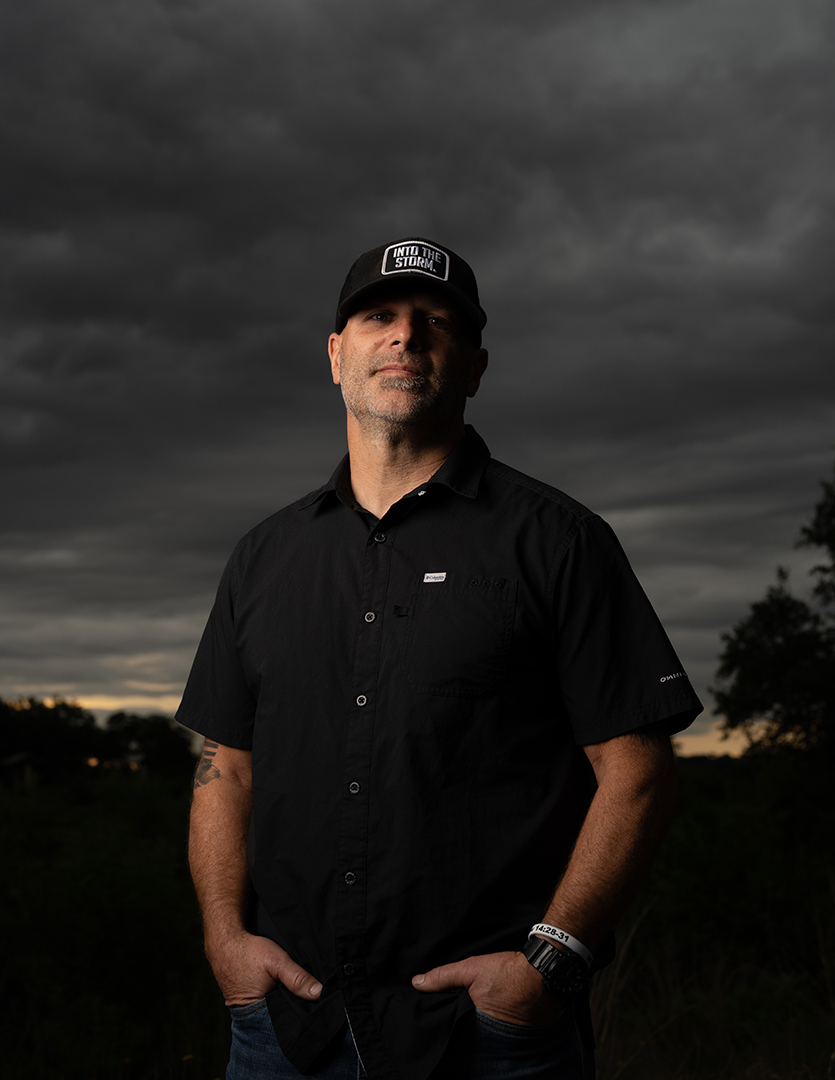
STILL STANDING The Scott Carlson Story
The first thing you notice about Scott Carlson is that he still carries himself like a firefighter.
Even sitting in a chair on the back porch of his Boerne home on a warm May afternoon, there’s a certain alertness about him. Broad shoulders. Thick hands. The posture of a man who spent years waiting for radios to crackle and tones to drop. It’s the kind of posture that doesn’t disappear just because the uniform does.
We sat outside for hours talking while cigar smoke drifted lazily through the Hill Country air. The late afternoon sun filtered between the neighboring houses, and every now and then Carlson would lean back, pause for a moment, and stare across the yard before continuing wherever the conversation had taken him next.
Some men tell stories in a straight line. Scott Carlson doesn’t.
His life has too many sharp turns for that.
Football. Austria. A near-death experience. Emergency medicine. Firefighting. Public controversy. Lawsuits. Career loss. Twelve moves in four years. Texas. Reinvention.
And somewhere underneath all of it sits the question that seemed to follow nearly every part of our conversation: Who is a man when the thing that defined him disappears?
For most of his life, Carlson answered that question through action.
As a young man, athletics became the first stable thing he could anchor himself to. Carlson describes his upbringing as difficult and, at times, chaotic. Structure wasn’t always guaranteed, but football was. Football rewarded discipline. It rewarded pain tolerance. It rewarded accountability. If you worked harder than the next man, there was usually a result waiting on the other side of it.
Like a lot of young men searching for identity, Carlson found purpose in physical challenge long before he found peace anywhere else. Football became the language through which he understood himself. It carried him farther than most kids ever imagine, eventually leading him overseas to play professionally in Austria for the Tyrolean Raiders.
At first glance, it sounds like the kind of chapter every young athlete dreams about. Europe. Competition. Adventure. A chance to build a life around the game you love.
But Austria also became the place where Carlson first came face-to-face with his own mortality.
According to Carlson, a catastrophic medical emergency during his time overseas left him in a coma and nearly took his life entirely. Sitting across from him now, it’s obvious that experience still lingers somewhere close to the surface. Men who have stared directly at death tend to carry themselves differently afterward. There’s often less pretending and less illusion of invincibility.
Young men spend a lot of their lives believing they’re indestructible. Carlson was no different. But near-death experiences have a way of stripping the arrogance out of a man whether he’s ready or not.
When he eventually returned to the United States, the next chapter of his life began pulling him toward emergency medicine and firefighting. In many ways, it fit naturally. Carlson had always gravitated toward intensity, structure, and high-performance environments. He worked as an EMT with American Medical Response in Vancouver, Washington, before eventually joining the Redmond Fire Department.
For more than a decade, the fire service became Carlson’s world. If you’ve ever spent time around firefighters, you know the culture is difficult to explain to outsiders. There’s a rhythm to it. Long shifts. Gallows humor. Constant training. Shared exhaustion. Meals around the station table. The strange emotional balancing act of seeing traumatic things while still figuring out how to laugh five minutes later.
Carlson thrived in that environment. Over the years, he worked his way into leadership roles, eventually serving as a Fire Lieutenant, Safety Officer, and HAZMAT specialist with the City of Redmond. Those roles carried enormous responsibility, but they also carried something Carlson valued deeply: trust. In emergency service, trust is earned under pressure. Your crew either believes you can perform when things go sideways or they don’t.
In 2019, Carlson was recognized as Redmond Fire Department’s Firefighter of the Year, an honor that reflected both his work ethic and his standing within the department. The recognition mattered because firefighting wasn’t simply a job to him. It had become part of his identity.
The uniform gave shape to his life. The station became brotherhood. The work provided mission and structure. Like many first responders, Carlson built his understanding of manhood around service, competence, sacrifice, and being the person others depended on when things went bad.
Then COVID arrived, and the ground underneath everything started shifting.
Public conversations about the pandemic have become so political over the last several years that it’s easy to forget how emotionally disorienting that period felt for many people, especially first responders. Carlson speaks less about politics than he does about fracture. Isolation. Distrust. The feeling that institutions and relationships alike were straining under enormous pressure.
The hardest part, according to Carlson, was losing his father during that period. He believes the restrictions surrounding the pandemic changed the way families experienced death and grief, and in his case, that experience deeply affected how he viewed authority and institutional decision-making afterward. Whether people agree with Carlson’s conclusions or not, it’s clear that the emotional impact of that season fundamentally changed him.
Eventually, those tensions collided directly with vaccine mandates implemented within his department.
Carlson sought exemptions and ultimately challenged the mandate rather than comply. What followed became a public and deeply personal unraveling. Legal battles emerged. Public scrutiny intensified. His firefighting career ended. According to Carlson, the fallout also jeopardized portions of the pension and future he had spent years building toward.
But careers are rarely just careers for men like Scott Carlson.
When firefighters lose the job, they often lose much more than a paycheck. They lose the rhythm that organized their lives. They lose the camaraderie. They lose the purpose that shaped their days and the identity attached to serving something larger than themselves.
Carlson described portions of that season almost like an emotional free fall. Financial pressure mounted. His family relocated repeatedly while trying to regain stability. At one point, he says they moved twelve times in four years. Sitting on the porch that afternoon, one thing became increasingly obvious: beneath the public controversy is a man still trying to sort through the wreckage of losing the life he thought he had built permanently.
And he doesn’t always talk about it cleanly.
At times, there’s visible frustration in him. At other moments, there’s humility. Sometimes confidence. Sometimes exhaustion. The contradictions sit side by side. That’s part of what makes the story compelling. Carlson doesn’t come across like a polished political symbol or a rehearsed culture-war figure. He comes across like a man who absorbed a tremendous amount of pressure and is still trying to determine what parts of himself survived it.
Like a lot of people who arrive in the Hill Country carrying bruises from somewhere else, Carlson seems to have found something restorative in the slower pace and grounded culture of Boerne. These days, he works in the wellness and health space, helping others pursue physical recovery and better health. In some ways, it feels like a natural extension of the life he’s always lived. Physical resilience, discipline, and endurance have shaped nearly every chapter of his story.
Age and hardship, however, have also added reflection.
As the conversation drifted into fatherhood, marriage, and faith, Carlson’s tone softened noticeably. There’s a different kind of wisdom that arrives when a man has lost enough to stop pretending he has everything figured out.
Modern culture spends a tremendous amount of time talking about masculinity, usually in extremes. Men are either portrayed as cartoonishly aggressive or endlessly passive. Real life is rarely that simple.
Most real men are mixtures of strength and damage, conviction and stubbornness, competence and insecurity. Sitting there listening to Carlson talk about his life, what stood out most wasn’t ideology. It was endurance. The willingness to keep rebuilding after public loss. The willingness to keep showing up for your family after your identity collapses. The willingness to continue searching for purpose after the uniform comes off.
That kind of rebuilding rarely looks dramatic in real life. More often, it looks quiet. Daily workouts. Long conversations with your children. Trying to strengthen your marriage. Learning how to exist without the adrenaline and structure that once shaped every hour of your day.
Toward the end of the interview, the afternoon heat finally began to ease. The cigar smoke had long since faded into the evening air, and the shadows across the backyard had started stretching toward sunset.
At one point, Carlson paused for a while before saying something that lingered with me long after I drove home.
“Everything changed,” he said quietly. “Everything.”
There wasn’t bitterness in his voice when he said it. Not really. Just the honesty of a man who’s lived through enough upheaval to stop romanticizing certainty.
Before we wrapped up, I asked Carlson the two questions I ask every cover subject.
What advice would he offer the men of Kendall County? His answer came immediately. “Forgiveness.”
Throughout our conversation, Carlson returned repeatedly to the idea that unresolved wounds shape the way men move through the world. Childhood scars. Family conflict. Betrayal. Career loss. Grief. Left unattended, they have a way of quietly influencing every decision that follows.
As Carlson put it, “Strong men are the ones who know how to forgive, not just know how to fight.”
When I asked what advice he would offer young men, his answer was equally direct.
“Make a value list.”
Carlson believes goals naturally change as life changes. The ambitions of an eighteen-year-old athlete eventually give way to the responsibilities of a husband, father, business owner, or grandfather. Values, however, should remain steady.
Sitting on that back porch as the afternoon faded into evening, it struck me that those two answers explain much of Scott Carlson’s story.
Forgive what needs forgiving. Know what you stand for. Everything else is just the road between them.
For years, Scott Carlson understood himself through titles. Athlete. EMT. Firefighter. Lieutenant. Now, like many men eventually must, he’s learning who he is without them.
Maybe that’s the part of the story that matters most.
Not the politics. Not the headlines. Not the lawsuits.
Just a man sitting on a back porch in Texas, trying to build something meaningful from whatever remains after the fire. And perhaps that’s what makes Scott Carlson The Kendall Gentleman. Not that he has all the answers, or that his journey has been without hardship, but that he continues to pursue purpose, character, and grace in the face of it.
Key Facts
- Full name: Scott Carlson
- Roles: former Fire Lieutenant with the City of Redmond; former professional football player for the Tyrolean Raiders in Austria; works in wellness and health
- Issue: July 2026
From the July 2026 issue of The Kendall Gentleman.
Scott Carlson’s story of rebuilding identity after a career-defining loss resonates with others in these pages. General Leroy Sisco showed the same quiet grit in Still Carrying the Load, while Jordan Ballin is a younger Kendall County man who learned to find a way through adversity. For more on what service and purpose can look like when life takes a hard turn, read about Officer Eduardo Murillo’s journey of service.