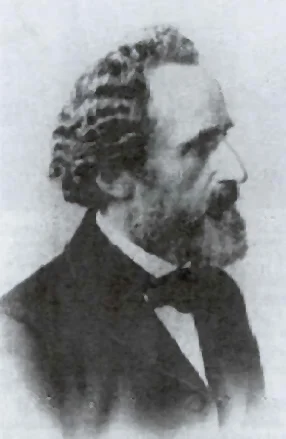
Ernst Kapp and the Enduring Legacy of a Texas Hill Country Visionary
Nestled deep within the picturesque embrace of the Texas Hill Country, the small community of Sisterdale often conjures images of rolling hills, meandering rivers, and a tranquil escape from the bustling world. Yet, beneath its serene surface lies a rich tapestry of history, woven with threads of intellectualism, philosophical daring, and a tenacious spirit of independence. At the heart of this unique narrative stands Dr. Ernst Kapp, a figure whose remarkable journey from a Bavarian scholar to a Texas frontier pioneer profoundly shaped the identity of Sisterdale and left an indelible mark on the intellectual landscape of early Texas.
Kapp’s story is not merely a tale of emigration; it is an odyssey of conviction, a testament to the enduring power of ideas, and a vivid illustration of how European intellectual currents found fertile ground in the rugged Texas wilderness. His contributions, from establishing a pioneering health spa to leading a radical abolitionist society, illuminate a fascinating chapter in Texas history that challenges conventional perceptions of frontier life.
From Bavarian Scholar to Texas Exile: The Genesis of a New Life
Ernst Kapp’s life began on October 15, 1808, in the quiet town of Ludwigstadt, Bavaria. His early years were marked by a fervent pursuit of knowledge, culminating in a doctorate from the prestigious University of Bonn. There, he had the privilege of studying under the renowned geographer Carl Ritter, a formative influence that would later manifest in Kapp’s expansive worldview and his comparative studies of human societies and their environments.
However, Kapp was not content to merely observe the world from an ivory tower. A man of deep liberal convictions, he became a vocal critic of the oppressive despotism prevalent in 19th-century Europe. His pen, a powerful instrument of dissent, ultimately led to his prosecution for sedition over an article published in 1849. Facing political persecution and an increasingly untenable intellectual climate in his homeland, Kapp made the momentous decision to seek refuge and a new beginning across the Atlantic. In 1849, he, along with his family, embarked on the arduous journey to Texas, a distant land promising the elusive ideals of freedom and self-determination.
This act of emigration was not merely a physical relocation; it was a profound ideological statement. Kapp, like many other German intellectuals of his time, was drawn to Texas by the promise of a society where enlightenment values—reason, liberty, and human dignity—could flourish unhindered by the autocratic regimes of Europe. This influx of educated and politically engaged Germans, often referred to as the “Forty-Eighters,” would significantly contribute to the cultural and intellectual diversity of early Texas.
Badenthal: A Haven of Healing and Holistic Wellness
Upon his arrival in Texas, Kapp wasted no time in establishing roots in his new home. In 1850, he acquired property in the nascent community of Sisterdale, among the lands originally purchased by Nicolaus Zink. It was on his tract, formerly belonging to George Holekamp, that Kapp embarked on an ambitious and forward-thinking venture: the establishment of the Badenthal Hydropathic Clinic.
The name “Badenthal,” meaning “natural spring valley,” was a direct nod to the very essence of the spa. Kapp shrewdly recognized the therapeutic potential of the local mineral springs, a resource that would become the cornerstone of his innovative health retreat. At Badenthal, he, along with Dr. Rudolph Wipprecht, offered a unique blend of water-cure treatments and gymnastics, embracing a holistic approach to health and well-being that was remarkably progressive for its time.
The Badenthal spa quickly gained a reputation as a minor health retreat, drawing in settlers from Sisterdale and the surrounding communities seeking relief from various ailments and a renewed sense of vitality. For roughly a decade, it served as a hub of wellness and a testament to Kapp’s entrepreneurial spirit and his belief in natural remedies. The spa’s operation, however, was ultimately curtailed by the tumultuous outbreak of the Civil War, which disrupted life across the state and led to its closure.
Remarkably, the physical legacy of Badenthal endures to this day. The original log home and patient quarters, silent witnesses to Kapp’s pioneering efforts, remain standing. Both Badenthal and an 1893 limestone schoolhouse nearby are now listed within the Sisterdale Valley historic district, preserving a tangible link to this unique chapter of the region’s past and offering a glimpse into the early blend of German intellectualism and wellness culture that defined Sisterdale.
The Crucible of Ideas: Sisterdale’s Intellectual Core
While the Badenthal spa was a significant undertaking, it was perhaps Kapp’s intellectual leadership that truly solidified Sisterdale’s unique identity. In 1853, he was elected president of Der Freie Verein, or “The Free Society,” a German-Texas organization rooted in abolitionist and free-thinking ideals and based in Sisterdale. This group, far from being a mere social club, was a dynamic intellectual force that would profoundly impact the political discourse of Texas.
In 1854, Der Freie Verein convened a statewide convention during the annual Sängerfest in San Antonio. It was here that the society publicly articulated its radical and progressive platform, calling for:
Abolition: A bold and unequivocal demand for the end of slavery, a deeply contentious issue in pre-Civil War Texas.
Free and Secular Education: Advocating for public education accessible to all, independent of religious dogma.
Equality: Championing equal rights for all individuals, regardless of their background or beliefs.
Direct Presidential Election: A call for greater democratic participation and a more direct voice for the people in national politics.
This audacious platform, a beacon of enlightenment in a conservative state, provoked a statewide backlash. Yet, it also cemented Sisterdale’s reputation as an intellectual haven, an enclave of German settlers who, despite their frontier surroundings, fiercely championed abolition and promoted the very enlightenment values that had led Kapp and his compatriots to Texas. Sisterdale fast became a hub of political and philosophical discourse, a testament to the power of collective intellect and moral conviction.
Life on the Frontier: Challenges and Resilience
Despite his intellectual pursuits and the operation of his spa, Kapp’s life in Sisterdale was far from an academic idyll. Like all settlers in the Texas Hill Country, he confronted the harsh realities of frontier life. He engaged in agriculture, livestock raising, and the demanding hands-on work of establishing a new settlement. Historical accounts paint a vivid picture of this existence, noting that his farmhouse featured a fortified iron-nailed door, a stark reminder of the ever-present threat of Comanche raids.
The frontier was a volatile environment, and safety was a constant concern. Evidence of this peril can be found in records of ranch thefts, including instances of horses being stolen from Kapp and his neighbors in 1858. These realities underscore the resilience and adaptability required of pioneers like Kapp, who balanced intellectual endeavors with the practical demands of survival in a rugged and sometimes dangerous landscape. The few settlers who did have agricultural experience often found themselves learning anew, adapting European farming techniques to the unique climate and soil of the Texas Hill Country.
A Return to Academia and a Lasting Intellectual Legacy
The ravages of the American Civil War profoundly altered the trajectory of many lives in Texas, and Ernst Kapp’s was no exception. In 1865, as the conflict drew to a close, Kapp made the decision to return to Germany. Ill health, a persistent companion in his later years, prevented him from ever returning to the Texas frontier that had been his home for nearly two decades.
Back in Germany, Kapp re-entered the world of academia, establishing himself in Düsseldorf. It was during this period that he produced some of his most influential and enduring works, solidifying his reputation as a profound and original thinker:
Vergleichende allgemeine Erdkunde (“General Comparative Geography,” 1869): This monumental work reflected his early training under Carl Ritter and showcased his expansive understanding of geography as a discipline that encompasses not only physical landscapes but also human societies and their interactions with the environment.
Grundlinien einer Philosophie der Technik (“Fundamentals of a Philosophy of Technical Science,” 1877): This groundbreaking treatise is arguably Kapp’s most significant contribution to intellectual thought. In it, he introduced the revolutionary idea of tools as “organ projections,” arguing that technology serves as an extension of human capacity and faculties. This concept, remarkably prescient, predated and anticipated the theories of later media theorists such as Marshall McLuhan, who would popularize the idea that “the medium is the message” and that technologies extend human senses. Kapp’s work laid foundational groundwork for understanding the profound relationship between humanity and the tools it creates, a topic that remains critically relevant in our technologically advanced world.
Ernst Kapp passed away on January 30, 1896, in Düsseldorf, leaving behind a legacy that transcended continents. His intellectual contributions were recognized in his native Germany, where he is included in the Allgemeine deutsche Biographie, the German equivalent of the Dictionary of American Biography, a testament to his lasting impact on German intellectual history.
The Enduring Significance to Kendall County and Sisterdale
Ernst Kapp’s story is more than a historical footnote; it is a vital part of the fabric of Kendall County and Sisterdale, resonating with profound cultural and symbolic importance:
Cultural Anchor: As both an intellectual leader and the proprietor of the Badenthal spa, Kapp profoundly shaped Sisterdale’s identity as a liberal, free-thinking enclave. He helped to cultivate an environment where intellectual discourse was valued and progressive ideals were openly discussed and promoted.
Symbolic Importance: The preservation of the Badenthal site and its original log home stands as a powerful symbol of Sisterdale’s early and unique blend of German intellectualism and a forward-thinking wellness culture. It represents a tangible link to a time when European ideas found new expression in the American West.
Historic Resonance: The legacy of Der Freie Verein’s radical abolitionist platform contributed significantly to Sisterdale’s reputation and, ultimately, to the region’s complex and often challenging confrontation during the Civil War era. The sentiments fostered by Kapp and his peers, who bravely advocated for Unionist beliefs in a deeply divided state, are honored by the Treue der Union Monument (Loyalty to the Union Monument), a powerful memorial in Comfort, Texas, dedicated to German Texans killed for their Unionist convictions. This monument stands as a poignant reminder of the moral courage and sacrifices made by those who, influenced by figures like Kapp, championed freedom and justice against the tide of prevailing sentiment.
In a world increasingly shaped by technology and the ongoing pursuit of well-being, Ernst Kapp’s ideas on “organ projections” and his pioneering efforts in holistic health feel remarkably contemporary. His journey from a persecuted European intellectual to a visionary Texas pioneer serves as a compelling reminder that the pursuit of knowledge, the courage to challenge established norms, and the unwavering commitment to ideals can take root and flourish even in the most unexpected corners of the world. The serene hills of Sisterdale, touched by the spirit of Ernst Kapp, continue to whisper tales of intellectual daring, a testament to the enduring legacy of a true sage of the Texas Hill Country.
Attribution:
Texas State Historical Association
Wikipedia
txgenweb.org & txgenwebcounties.org
The Portal to Texas History
From the September 2025 issue of The Kendall Gentleman.
From the Hill Country archive: Kapp belonged to the freethinking German circle whose convictions led to the tragedy commemorated by the Treue der Union Monument in Comfort. For another Hill Country mind devoted to recording the county’s story, read about Albert Carl Riedel, the unsung storyteller.