TTB
The acronym that sends shivers through distilleries everywhere is the dreaded Alcohol and Tobacco Tax and Trade Bureau under the U.S. Department of the Treasury. No one likes mentioning TTB, but they oversee our industry. However, this TTB actually refers to the Taxes, Troops, and Barrel fight, which is better known as the Whiskey Rebellion. I get that not everyone is into history, but trust me, this is a topic connected to whiskey and veterans.
In a land far, far away called Pennsylvania, and a long time ago in 1791, some farmers grew acres of rye! These farmers had more rye than they could eat, store for tough times, and sell to others. They had a handy skill that turned that rye into a product that could bring in more resources when they chose not to keep it for special celebrations. Many of these farmers owned small pot stills, which they used to create a rye-distilled spirit. Corn-based spirits did not emerge until later, when a deeper understanding of corn was gained.
During the Revolutionary War, the states accumulated their own debts, totaling over $100 million. They were paying for their militias out of their own pockets. Sadly, the states and our new nation did not have enough money. Secretary of the Treasury Alexander Hamilton had a great idea—taxes! Taxes help generate revenue to pay off the debt. Everyone now thinks he is so cool because of a popular musical about him, but Hamilton really loved paying taxes to help reduce the massive, new national debt. He knew there were over 150 large distilleries and many smaller private ones that could help generate revenue through an excise tax. President Washington and Secretary of State Jefferson opposed this idea, saying it was not the best, but they did not have many better options to raise money. Washington brought the concept to Pennsylvania and Virginia, where the local governments accepted it without consulting their people.
A law was quickly passed requiring distilleries to pay a cash fee of six to eighteen cents per gallon to their local county officials. The fee was based on the potential production capacity, with lower rates considering the still’s possible output rather than the actual amount distilled. Cash was a limited resource for smaller, rural distilleries. If the taxes went unpaid, they had to appear before a federal judge. Rural farmers who used distilled spirits as currency faced disadvantages in every way. Cash, distance, and time were all valuable commodities as they struggled to survive in the wilderness.
On July 15, 1974, U.S. Marshal David Lennon and Federal Revenue Officer John Neville traveled to Pennsylvania to serve subpoenas on individuals who had not paid their taxes and were required to appear in Federal court in Philadelphia. They faced a hostile crowd after serving a subpoena to their farming neighbor, William Miller. The very next day, more people gathered outside Neville’s house, believing Marshal Lennox was there. Confronted by these armed individuals, Neville ended up shooting and killing Oliver Miller. Then, on July 17, a group of approximately 500 local militiamen returned to Neville’s house. A tense shootout resulted in the death of rebel leader James McFarlane, and outnumbered, the Federal agents surrendered. The rebels burned Neville’s house and barn to the ground. A few days later, David Bradford, who was the deputy county attorney for Washington County, took charge of the rebels in the area.
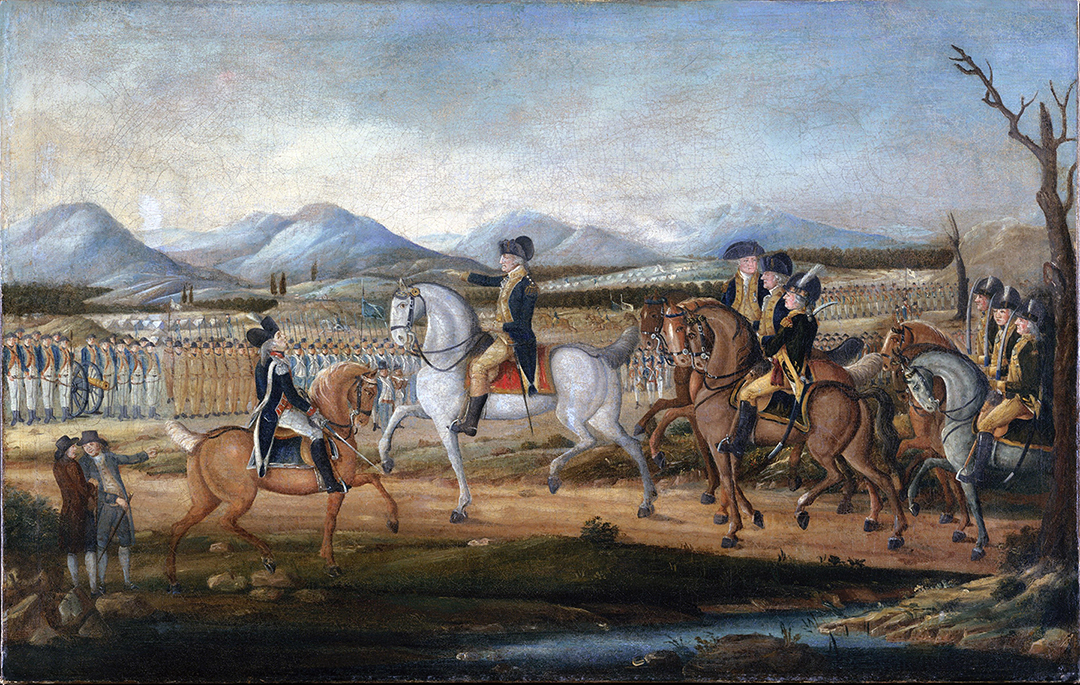
Several thousand rebels moved to Braddock’s Field near Pittsburgh, where more gathered to protest the whiskey tax. Calls went out for the local militia to assemble near Pittsburgh to control the rising violence during the last week of July 1794. President Washington met on August 2 with his Cabinet and Pennsylvania’s governor, Thomas Mifflin, to discuss the situation. The President declared on August 7, calling on the rebels to “disperse and retire peaceably to their respective abodes.” The declaration also invoked the Militia Act of 1792, which, after Federal court approval, allowed the President to use State militiamen to suppress internal rebellions and “cause the laws to be duly executed.” On the same day, Secretary of War Henry Knox sent a letter to the governors of Maryland, New Jersey, Pennsylvania, and Virginia, requesting a total of 12,950 militiamen to end the rebellion. By mid-November, the militia arrested 150 rebels, including twenty leading figures of the insurrection. A general pardon was issued on November 29 for all those involved “in the wicked and unhappy tumults and disturbances lately existing,” except thirty-three men named in the document.
The Whiskey Rebellion challenged the new Constitution and the authority of the Federal government, affirmed the supremacy of Federal law, and supported Congress’s right to levy and collect taxes.
These troops had just returned home after fighting in the Revolutionary War. They were beginning to settle back into their routines when the President ordered them back to duty. It’s possible some of them had their own stills or were known to buy whiskey from smaller producers. Those of us who have served never get to choose when or where we go. We do not get a say in whether we believe in the cause or not. We prepare for it to be tough and are thankful when things are easier. We do it because we made a solemn vow to our country. We gather and raise our glasses in celebration with loved ones, remembering those we miss.
Please refer to the TTB website for more information about the details of the Whiskey Rebellion. https://www.ttb.gov/public-information/whiskey-rebellion
From the November 2025 issue of The Kendall Gentleman.
More from the TKG cellar: every whiskey has a story worth telling, and a lot of that story starts with the grain. Mashbills: The Agricultural Recipe for Whiskey breaks down exactly how the crop shapes the pour. Then pull up a chair, light an Espada Ricasso by Montecristo, and settle in.