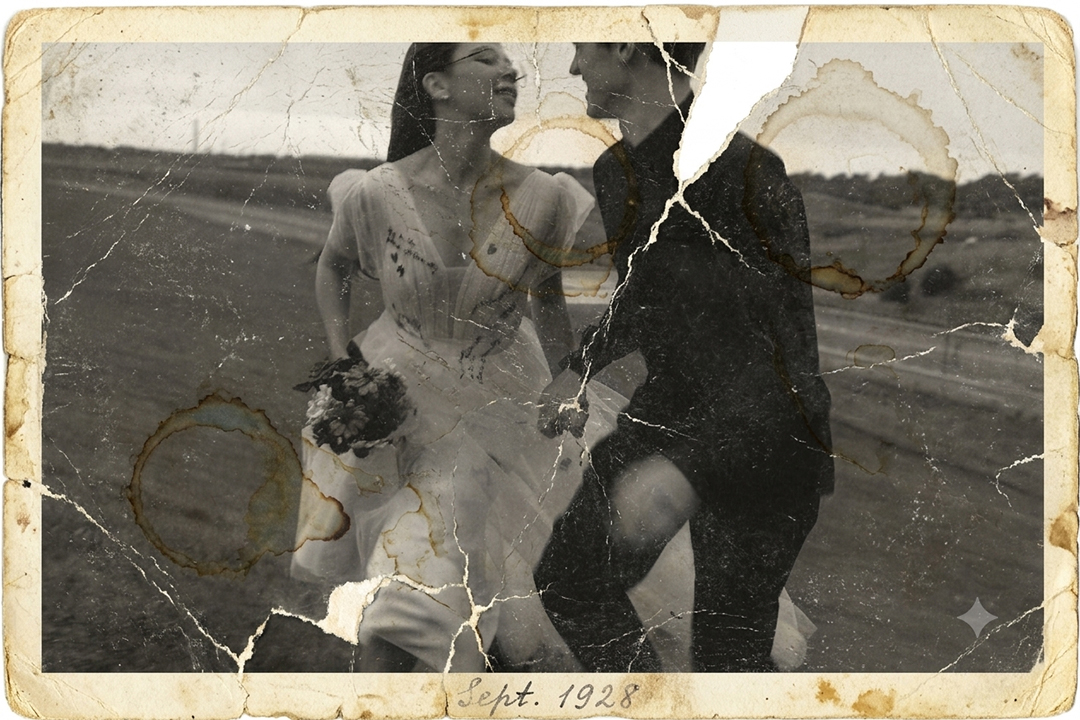
Growing up in a solid Baptist home, dancing was never really discussed. Scottie Leech made sure piano lessons and choir weren’t optional – those were settled matters. Rhythm in our house came from a hymn book, not a hardwood floor. And if that didn’t shape the rest of us, my dad’s reputation in Brownfield certainly did. Jack Leech was known around town as a winning Little League and later Babe Ruth coach, the kind of coach who could size up a kid’s swing, adjust a grip, and turn a two-hopper into a clean single. Between Mom’s hymns and Dad’s baseball diamond, a two-step wasn’t exactly in the curriculum.
So, by the time I got to South Plain College, my dancing ability was generous to call undeveloped.
And it showed.
It all started in the fall of 1978 when a girl from Sundown taught me how to two-step at the SPC student union. She meant well, and in her defense, she probably thought that was enough. What she gave me was left, right, right, left – a marching pattern pretending to be a dance. Whoever taught me that is probably still smiling.
I carried that little robotic sequence into my early days at Tarleton when I first met Carla. She watched my feet long enough to be polite, then finally asked, “What are you doing?”
I told her honestly, “This is how they taught me at SPC.”
She laughed – kindly, or as kindly as possible under the circumstances.
That was the first clue to her that I wasn’t a true two-stepper.
The second clue, she still says, was my complete lack of a waltz. I could knock down free throws all day long and run 10 miles on a Sunday, but put me on a dance floor for a smooth three-count glide, and I turned into a February fence post – still because of the cold, unmoving because I didn’t know any better.
The third clue – her favorite – came one night when she glanced down and noticed my jeans.
“Stan,” she said, “nobody at Tarleton wears Sedgefield jeans. You need some Wranglers”
She wasn’t wrong.
She had me at no Sedgefields.
But somewhere in those early dances, something else was happening. She wasn’t just correcting my feet – she was steering me, gently, the way she always has. Teaching me to relax, to look up, to quit marching my way through the dance, and to trust a rhythm instead of fighting it.
She tapped my shoulder and said, “Don’t look down…and don’t watch your feet. Just glide. It’s supposed to be slow…step, step…slow.”
“No…it’s supposed to be slow, quick, quick, slow.”
Back then, she thought she was just making the dance easier.
But that old rhythm had more in it than either of us realized.
Life together began to fall into that same pattern. Getting married. Raising Courtney and Coby. Coaching seasons. Her thirty-one years in the classroom. Long stretches when the pace settled, followed by bursts of movement when everything seemed to happen at once. And woven through it all, the kind of strength you don’t plan for but learn in real time.
In 1996, when cancer first entered our home, the rhythm slowed. Then quickened with appointments, decisions, and unknowns. And slow again as healing took root. Two more rounds would follow through the years, and she kept teaching through two of them, never letting her students see anything but steadiness. It didn’t feel heroic at the time. It felt like life – our life – finding its footing again and again. Slow, quick, quick, slow.
We didn’t talk about it like a pattern. We didn’t chart it or name it. We simply lived it. Seasons of calm, seasons of motion, seasons that demanded more than either of us thought we had, and seasons that gave back more than we deserved. It never lined up perfectly, never repeated neatly, but the rhythm was always there if you looked closely enough.
Carla learned early on those Tarleton dance floors that I was more goal-driven than glide-driven. A simple two-step could become a project if I wasn’t careful. She never lectured me about it. She never sat me down for a conversation. She just kept quietly steering – one step, one moment, one season at a time.
Looking back, one of the first memories is of me with that old marching pattern – head down, concentrating, trying not to miss a step – wearing those Sedgefield jeans she outlawed the first chance she got. We had no idea at the time that my shaky two-step was prophetic, and she had no idea that her steering on that dance floor would be followed for over forty-five years.
But that old rhythm – simple, steady, true – kept showing up.
Slow, Quick, Quick, Slow
From the August 2026 issue of The Kendall Gentleman.
Stan Leech has shared his voice with readers before in We Do What We Want and Walk Up Music, and continues that reflection here. This month’s Faith & Leadership entries also include Herbie’s Cabin. For more from this issue, read Addison Schuepbach’s BetterMENt: Ask That Girl To Dance.