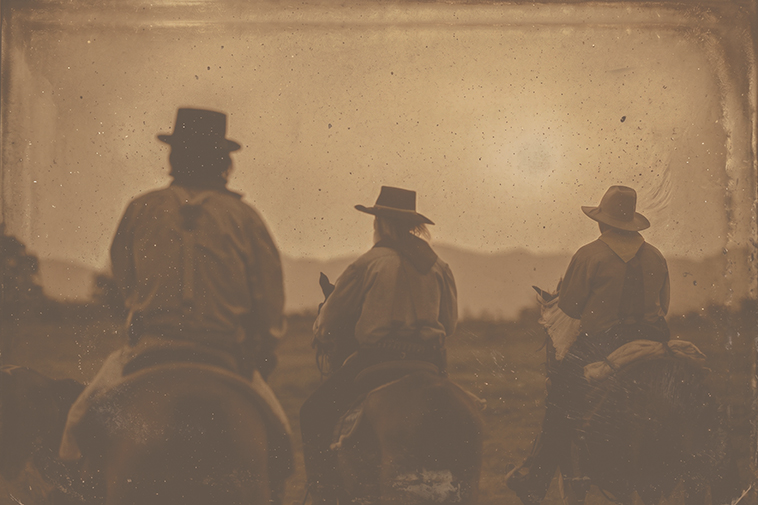
Men of the Hill Country: Kendall County’s Legacy in America’s 250-Year Story
Featuring the Kuhlmann, Fabra, Herff, and Dienger Families
As the United States approaches its 250th anniversary, communities across the nation are pausing to reflect on the people who shaped their corner of the American story. Here in Kendall County — where limestone bluffs rise above cypress-lined creeks and history feels as close as the next fence line — the men who built the Texas Hill Country stand as enduring reminders of what courage, perseverance, and community spirit can achieve.
Their stories are not abstract tales from distant centuries. They are the lived experiences of families whose names still echo through our schools, ranches, churches, and civic institutions. Among them, four families — the Kuhlmanns, Fabras, Herffs, and Diengers — represent the very best of what the Hill Country has contributed to the American experiment.
Their legacy is not only local. It is part of the broader national story of settlement, freedom, innovation, and service. As we celebrate America’s semiquincentennial, their lives offer a powerful lens through which to understand how ordinary men built extraordinary communities.
The Kuhlmann Family: Ranchers, Stewards, and Quiet Pillars of the Land
The Hill Country has always demanded a special kind of resilience from those who work its soil. The Kuhlmann family embodies that spirit. Arriving in the mid-19th century, they established ranching operations that would span generations and help shape Kendall County’s agricultural identity.
The early Kuhlmann men were known for their deep understanding of the land — its rhythms, its challenges, and its potential. They practiced stewardship long before the word became fashionable. Rotational grazing, water conservation, and careful land management were simply common sense to them, born from a respect for the fragile balance of the Hill Country ecosystem.
Their ranches became more than economic enterprises. They were gathering places where neighbors shared news, traded labor, and built the bonds that define rural life. The Kuhlmann men served as mentors to younger ranchers, offering guidance on everything from cattle health to fence building to surviving the next drought.
In many ways, their story mirrors the broader American agricultural narrative: families who built prosperity not through speculation or shortcuts, but through sweat, patience, and a commitment to leaving the land better than they found it.
As America marks 250 years, the Kuhlmann legacy reminds us that the nation’s strength has always rested on the shoulders of men who understood that stewardship is both a duty and a privilege.
The Fabra Family: Merchants, Community Builders, and Anchors of Early Boerne
If the Kuhlmanns represent the agricultural backbone of Kendall County, the Fabra family represents its commercial heart. Their contributions to early Boerne helped transform a frontier settlement into a thriving community.
The Fabra men were merchants, but they were also connectors — people who understood that a town’s success depended on more than goods and services. Their stores became social hubs where ranchers, travelers, and townspeople gathered to exchange stories, share news, and strengthen community ties.
In an era when isolation could be dangerous, the Fabras provided stability. Their businesses offered essential supplies, but they also offered something less tangible: a sense of continuity and reliability. When a Fabra man opened his doors in the morning, the town knew it could count on him.
Their influence extended beyond commerce. Members of the Fabra family served in civic roles, supported local churches, and helped establish community traditions that endure today. They were the kind of men who understood that leadership is not about titles — it is about showing up, day after day, for the good of the community.
As we reflect on America’s 250 years, the Fabra story reminds us that the nation’s prosperity has always depended on men who built not only businesses, but the social fabric that holds communities together.
The Herff Family: Innovators, Healers, and Guardians of the Hill Country
Few families have left a deeper imprint on Kendall County than the Herff family. Their story begins with Dr. Ferdinand Herff, a man whose medical skill and pioneering spirit made him one of the most remarkable figures in Texas history.
Dr. Herff was more than a physician. He was a visionary who brought advanced medical practices to the frontier, performing surgeries that were decades ahead of their time. His work saved countless lives and established a standard of care that shaped the region’s medical development.
But the Herff legacy extends far beyond medicine. The men of the family became ranchers, conservationists, and civic leaders. They understood that the Hill Country’s natural beauty was both a blessing and a responsibility. Their land stewardship practices helped preserve the springs, grasslands, and wildlife that define Kendall County’s landscape.
The Herff Ranch became a symbol of sustainable land management, blending agricultural productivity with ecological preservation. Today, the property stands as a living testament to the family’s commitment to the land and community.
In the context of America’s 250th anniversary, the Herff story highlights a uniquely American theme: the power of innovation, service, and stewardship to transform not only individual lives, but entire communities.
The Dienger Family: Champions of Learning, Culture, and Civic Life
If the Herffs shaped Kendall County’s physical and medical landscape, the Dienger family shaped its intellectual and cultural heart. Their contributions to education, literacy, and community life remain among the most enduring in the region.
Albert Dienger, perhaps the most widely recognized member of the family, served as a librarian, civic leader, and cultural advocate. His dedication to learning helped establish the foundation for what would become the beloved Dienger Building — a landmark that continues to serve as a gathering place for readers, thinkers, and community members.
The Dienger men believed that a strong community required not only economic and physical infrastructure, but intellectual nourishment. They championed literacy, supported local schools, and encouraged civic engagement. Their influence helped ensure that Boerne would be a place where ideas mattered as much as industry.
Their legacy is a reminder that the American story is not only about settlement and survival. It is also about the pursuit of knowledge, the cultivation of culture, and the belief that education is essential to a thriving democracy.
As the nation celebrates 250 years, the Dienger family stands as a testament to the power of learning to shape both individuals and communities.
Threads That Bind: A Shared Legacy of Service and Community
Though the Kuhlmann, Fabra, Herff, and Dienger families contributed in different ways, their stories share common themes — values that define both Kendall County and the American spirit.
Resilience. Each family faced hardship — droughts, economic uncertainty, frontier dangers — and met those challenges with determination.
Service. Whether through ranching, commerce, medicine, or education, these men served their community with humility and purpose.
Stewardship. They understood that the land, the town, and the people were interconnected, and they acted accordingly.
Legacy. Their contributions were not fleeting. They built institutions, traditions, and landscapes that continue to shape Kendall County today.
As America reaches its 250th year, these families remind us that the nation’s greatness has always been built from the ground up — by men who worked quietly, faithfully, and with a vision for the future.
Carrying the Torch Forward
The next chapter of Kendall County’s story will be written by the men who step forward now — those who preserve land, mentor youth, serve in civic roles, build businesses, and strengthen community life.
In honoring the Kuhlmanns, Fabras, Herffs, and Diengers, we are reminded of the responsibility we carry today: to ensure that the values they embodied continue to guide us into the next 250 years.
Their stories are not just history. They are a call to action.
And here in Kendall County, that legacy continues — strong, steady, and deeply rooted in the Hill Country soil.
From the July 2026 issue of The Kendall Gentleman.
Tom Allred’s history column builds on years of stories about the men who built Kendall County. Read about August Hoffman, a young Hill Country Unionist who gave everything for principle, and the monument raised in their honor at Treue der Union in Comfort, Texas. For the German immigrant roots that shaped this region, see From Prussian Millwright to Texas Trailblazer and the story of Bob and Della Russell, early Boerne pioneers.