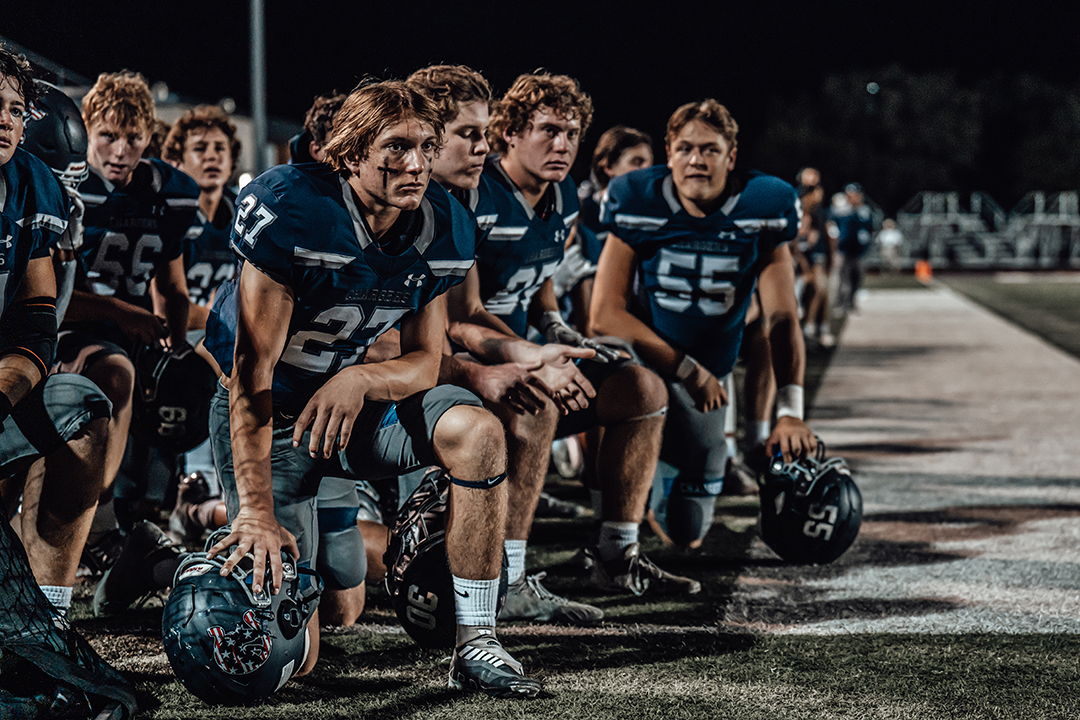
In Texas, you can feel Homecoming before you see it. It’s the jingle of bells on a ribbon, the rustle of mums brushing down a hallway, and the low hum of a marching band in the distance. The air is cooler—football weather—and Friday night isn’t just another game. It’s the night a whole town comes home.
College Homecoming festivities, whether they started at Baylor in 1909 or Missouri in 1911, began with a simple invitation – “Come back.” At Baylor, the purpose went beyond a friendly reunion- it was also about improving attendance at the game and rallying support for the team. Alumni were called home to watch, cheer, and invest their hearts back into the school. That invitation grew into a weekend of football, parades, and reunions. By the 1930s and 40s, high schools across the country had caught on.
Boerne High School began its own return-to-campus game in 1952, and that tradition has now stood for 73 years. That year, Nancy Huff was crowned the school’s very first Homecoming Queen, with Darla Ward and Doris Moore serving as princesses. The week’s events included a community bonfire, a fiery tradition that lit up the night until 1988, when it was replaced by the Homecoming parade. In Texas, Homecoming is a universal language. Everyone knows the vocabulary: schedule a win if you can and hope you’re not the guest team too many times. Towns host parades, light bonfires, and crown kings and queens—sometimes before the game, sometimes at halftime. Seniors circle the date on the calendar months ahead, and the rest of the school plans who will ask whom to Homecoming.
Back in the day, the dance was one of the crown jewels of the week. Today, it’s less of a universal draw, but the week still holds its magic. Everyone has vivid memories of this sacred annual event.
Every school adds its own twist, but there’s one ritual that threads through Texas Homecomings like no other—mums. Yes, mums. Once upon a time, getting close to 100 years ago, a boy gave a girl a single chrysanthemum, dressed up with a ribbon in school colors, to wear at the big game. It was a simple gesture, equal parts of school pride and courtship.
Over the decades, Texas mums grew like Texas football. One bloom became two, then a spray. The real flowers gave way to silk, so they could last for years and survive a full day of classes before kickoff. Businesses sprang up – some of them one-person operations – that could make enough in a month of mum-building to carry them until the next fall. Today, mums are a full-scale industry, with custom orders, theme designs, and prices that can rival a good pair of boots.
And it’s not just the girls anymore. Somewhere along the way, the Homecoming garter was born – smaller, worn on the arm, but still packed with ribbon, bells, charms, and school colors. Parents make sure nobody is left out, because the mum isn’t just decoration – it’s participation in the ritual.
If you step back and think about it, it’s remarkable. What began as a single seasonal flower has become a piece of wearable art that says, “I’m part of this community.” The fact that the flowers are no longer real is almost beside the point. In a way, it mirrors the tradition of Homecoming itself: it’s not about the object or the event, it’s about what it represents – belonging.
Of course, the game still matters…in theory. But Homecoming week has a way of stealing the spotlight. Monday might be “Western Day,” which is just an excuse to wear boots to algebra. Tuesday is “Tango Tuesday,” because nothing says football like a slow-turn ballroom dip in the hallway. Wednesday? “Wacky Sock Day,” when even the most serious students admit to owning socks with tacos, flamingos, or both. By Thursday, there’s a pep rally, and by Friday morning, the halls are alive with the sound of bells, the swish of ribbons, and the flash of mums big enough to block half a doorway.
And here’s the thing about Homecoming reality – it’s really about connections, and if we’re honest, those connections are strongest the year after you graduate. That’s when you still know all the seniors because you sat by them in chemistry at some point in your high school career, and you can still name the homecoming court without peeking at the video board. Two years out, you might know one or two – unless you have a younger sibling in the band, on the dance team, or wearing a football helmet. After that, your attendance depends more on nostalgia than name recognition.
Carla and I still enjoy going back to Tarleton at least once a year, and when it happens to fall on Homecoming, it’s special. Sometimes we don’t see a single person we knew “back in the day,” but just walking those streets, remembering what was there then and isn’t now, is worth the entire going-home experience.
The beauty of the mum is that it’s the one item that every corner of the school has in common – band, dance, cheer, students, and players. For one night, everyone wears the same symbol, layered with ribbon and bells, as to say, “We’re all part of this.”
For coaches, Homecoming can be…complicated. We’ll call it “a distraction” and leave it at that. Spirit week is fun, but it’s hard to focus on third- and- long when Monday is “Western Day,” Tuesday is “Tango Tuesday,” and half your offensive line is jingling from the bells on their garters. And let’s not forget the mums themselves—glorious, oversized, impossible-to-ignore. For the rest of the school, the mum is the centerpiece; for the coach, it’s one more reason players aren’t quite locked in on reacting to their game assignments.
And yet, in the middle of the distraction, you can’t deny the truth – this is the one night the whole town turns out. The stands fill early, the buzz is different, and the scoreboard matters a little less than the fact that we’re all here together. The mum, the parade, the awkwardly wonderful reunions…that’s the real “coming home.”
For football players, it’s the chance to play in front of the largest crowd they’ll likely ever see in their careers. It’s the great reward for all those summer workouts in the heat, the early mornings, and the hours in the weight room. It might just be the best life lesson of them all—nothing truly good happens without a lot of work and preparation.
From a leadership perspective, it’s a master class in the power of shared traditions. The mum is a visible, tangible signal that you belong here. It’s a conversation starter, a connection point, and a memory you can hang in your closet long after graduation. For the younger students, it’s a promise – one day, it will be your turn. For alumni, it’s a link to a younger self, the sound of the band on a cool fall night, and the feel of those first lights coming over the field.
Spiritually, it’s a picture of return. Just as Homecoming calls alumni back to the place where they were shaped, the mum calls us back to the values we learned here – loyalty, pride in where you’re from, and joy in celebrating with others. Traditions like this remind us that the past isn’t something we leave behind; it’s something we carry forward.
And so, when October rolls around, and the air turns just a little cooler, and the stadium lights pierce the early dark, mums return. Some are modest, some outrageous, some simple, some loud enough to jingle down the hall. But each one is part of something bigger – a tradition that has been 73 years in the making in Boerne, and more than a century across Texas.
From one flower to many, from fresh to artificial, from a small gesture to a statewide phenomenon – the mum remains a symbol of a season, a community, and a game that’s about more than a scoreboard.
It’s about being home.
From the October 2025 issue of The Kendall Gentleman.
More from Stan Leech’s Faith & Leadership column: For the other half of Friday-night ritual, read Walk Up Music. For another Texas-specific marker of place, read Mountain Laurel.